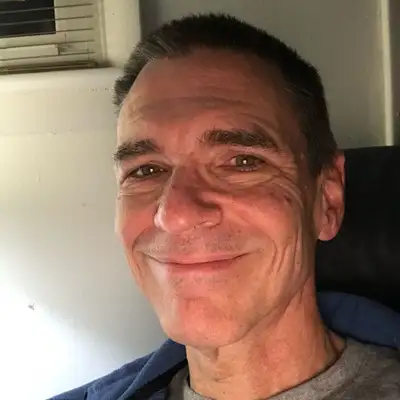
Hi, friends, and welcome to the Weekly Dulin Podcast, a brief weekly reflection from Dulin United Methodist Church in Falls Church. Here, we take time to think together about faith, community, and what it means to live as disciples of Jesus in today's world.
James:Good afternoon, Dulin Church. It's me, James Henry, your pastor. It's good to be with you today. Though, when you're watching this, I will actually be in Greenbrier County, West Virginia. I will be serving with our team from Dulin Church at Appalachia's Service Project with 15 others of the Dulin community.
James:It's good to be with you today to talk a little bit about Appalachia Service Project, but to talk about in a larger way what mission means to us as a church, as individuals, as people called upon by God to act as a community on behalf of the larger community of which we're a part. If you listened about ten days ago, I preached a sermon in which I talked a little about being sent. It was the same Sunday when we consecrated our team to go out and to the commissioned them to be our missionaries in the world. And in which I told you, all of you who are members of Dulin Church and beyond friends of Dulin Church, that you are the missionaries. You are sent as well, not just those folks that we commissioned that morning.
James:And I talked in the midst of the sermon a little bit about the history of Appalachia Service Project, which began as one neighbor, a pastor helping another neighbor, and then grew into the organization that it is today, where not only does it do home repair but it's building new houses for people as part of disaster relief. They have grown that ministry into a bigger way of touching people's lives. Now, what we'll be doing, we'll be part of the summer program, which has been sort of the backbone for lots of years of what ASP does. They work throughout the year, but the summer program is really when they bring in, you know, as many as 10,000 to 12,000 volunteers from across The United States who come to make a difference, to make people's houses warmer, safer, and drier. Now, if you went to some of these houses and you realized that the making of that house warmer, safer, and drier might not last quite as long as you might wish.
James:But for the time that it lasts, five, ten years or perhaps more, the people in that house are going to be warmer. That means they're going to spend less money on heating that house. It means that they're going to be dry and that they're going to be safer than they were when there might have been holes in the floor in the living room or when the stairs were way too steep going out the out of the house and so it was difficult for them to get in and out. You see, what we do when we engage in ministries like Appalachia Service Project where we actually develop relationships is we do exactly what Jesus was doing. Jesus modeled for us what it looked like to heal people.
James:I won't say that he never healed someone he didn't personally encounter because there were times the Roman centurion encountered him and said, I know what it's like to be in charge of people. You don't have to come to my house to heal my servant. You just have to say the word and he'll be healed. That kind of faith was rare. And here was a Roman centurion that had it.
James:And yes, Jesus was in a relationship with a centurion, not so much the one that was healed, but it was certainly through that one that the healing took place. Over and over again, he stops by the side of the road and he talks to people that otherwise might not be recognized as important enough to be talked to. He talked to people who excluded from the rest of society because of diseases or various challenges that that society saw as making them untouchable. Jesus developed relationships. Now one of the things I also told you in the sermon but I'll remind you is that Appalachia Service Projects understands itself as a relationship ministry with construction on the side.
James:Now construction is a big part of the side. It's like side by side, very close to being equal. But as important as the construction we do is the relationships we develop. And it's not just important to the people of Appalachia, it's important to us. Over and over again, when I have been on summer mission trips with Appalachia Service Projects and developed relationships, I was the one that was changed.
James:I was changed by conversations I had with summer staff members. I was changed by conversations I had with the youth and other adults that were part of my group. I was also transformed by the conversations I had with homeowners, with people whose houses we were repairing. You listen to them talk with pride. It's one thing when a friend helps you out, someone who cares about you and it's another thing altogether when someone comes in and helps you out that you don't know.
James:So that relationship kind of opens the door for a deeper connection, not just keeping the rain out, keeping the cold out, making it safe to go up and down the steps and to walk on the floors in the house. It's not just that, That relationship carries from that place a kind of mutuality. We see that when we spend time with other folks there but for the grace of God go we. Any one of us could be in the same place. It is by the accident of our birth that we are where we are.
James:And everyone, as we talk about regularly at Dulin, everyone is loved by God. The person in Appalachia is no less loved than the person of Falls Church or anywhere else. We are all loved. We are all loved. And by working together as we do, we share that love.
James:Love is never just a warm fuzzy feeling we have inside. In fact, sometimes love is inconvenient. It makes us travel from Falls Church to Greenbrier, West Virginia so that we can work on a house and that doing so makes a difference in that person's life. It's worth the distance we go. It's worth the challenges we face.
James:We offer the same kinds of opportunities for hands on mission and ministry here in the Falls Church area. Maybe you can't go for a week long trip to Appalachia Service Project but you can volunteer to be a part of our team that works on the Ministry of Hope. Gather, help people park in the parking lot. You can help lead, you can volunteer to be one of our Sunday school teachers on a Sunday morning. You may not think of these as missions, but they make a difference.
James:You can volunteer to provide coffee fellowship on a Sunday morning. And what happens is after worship, people gather around food and coffee and juice, water, and they talk to each other. They engage in fellowship. They encourage each other. They get to know each other better.
James:These are all missions and ministries of the world. We build relationships. The core of Christianity is not knowing a lot of things. It is knowing each other. It is connecting and loving each other.
James:And it is in that connecting that we also connect ever more deeply with God. If somebody were to ask us on most days what church is about, it's about connecting with God. It's about loving God. And in part that's true. But Jesus said that equally it's loving God and it's loving the neighbor.
James:It's the neighbors that we know. It's the neighbors that are in Greenbrier, West Virginia, where I am while this video is playing for you. It is the neighbors who are around the world whose ministries we support, oftentimes in financial ways, but sometimes by physical appearance, by going there. Dave and Sunita Lowe make a trip have have been on mission to Cuba. I've been on mission before to Mozambique and, Ghana.
James:Though most of the most of my experience in Ghana was mission to me even though I was there. The truth is God wants us to see we are already related. We are connected to one another. That there is more that connects us than divides us. And when we reach out a hand, when we engage in a conversation, when we open a listening ear, when we go to places like Greenbrier, West Virginia, and all the other places Dulin has been in the past, when we go out of our way to volunteer to be part of leading the youth group or singing in the choir or going to Sunday school or teaching Sunday school or doing yard work, leaving the memorial garden.
James:When we go out of our way to do those things for one another and serve one another, we are drawing closer in relationship to each other, to God, and to the world that God loves. So just remember how powerful mission is. Appalachia Service Project does make people's houses warmer, safer, and drier as well as building brand new houses for families whose houses wash away in floods, etcetera. We can make a difference here at Dulin too, and we are. You're such a generous congregation financially but also with your time.
James:So just remember, we're in this as missioners on god's behalf. We are sent into a world that god God wants us to be a part of, that God already loves. So Dulin Church, it has sort of become my refrain recently to encourage you and welcome and invite you to be Dulin Church wherever you are. Be kind, be loving, care for your neighbor, care for the earth, and certainly seek ways to love God as best you can. These are ways that we are in mission.
James:I'm so glad to be your pastor. I am glad to be away this week with the Appalachia Service Project team and I wish you all the best until next week when I'll be back again. At least that's, what I anticipate. All the best, my friends.